Many parents notice a puzzling situation: a child spends hours studying but still finds it difficult to perform well in exams. Research from the National Training Laboratories suggests that learners retain only 10% of what they read but nearly 75% of what they practice. This difference happens because every child processes information differently.
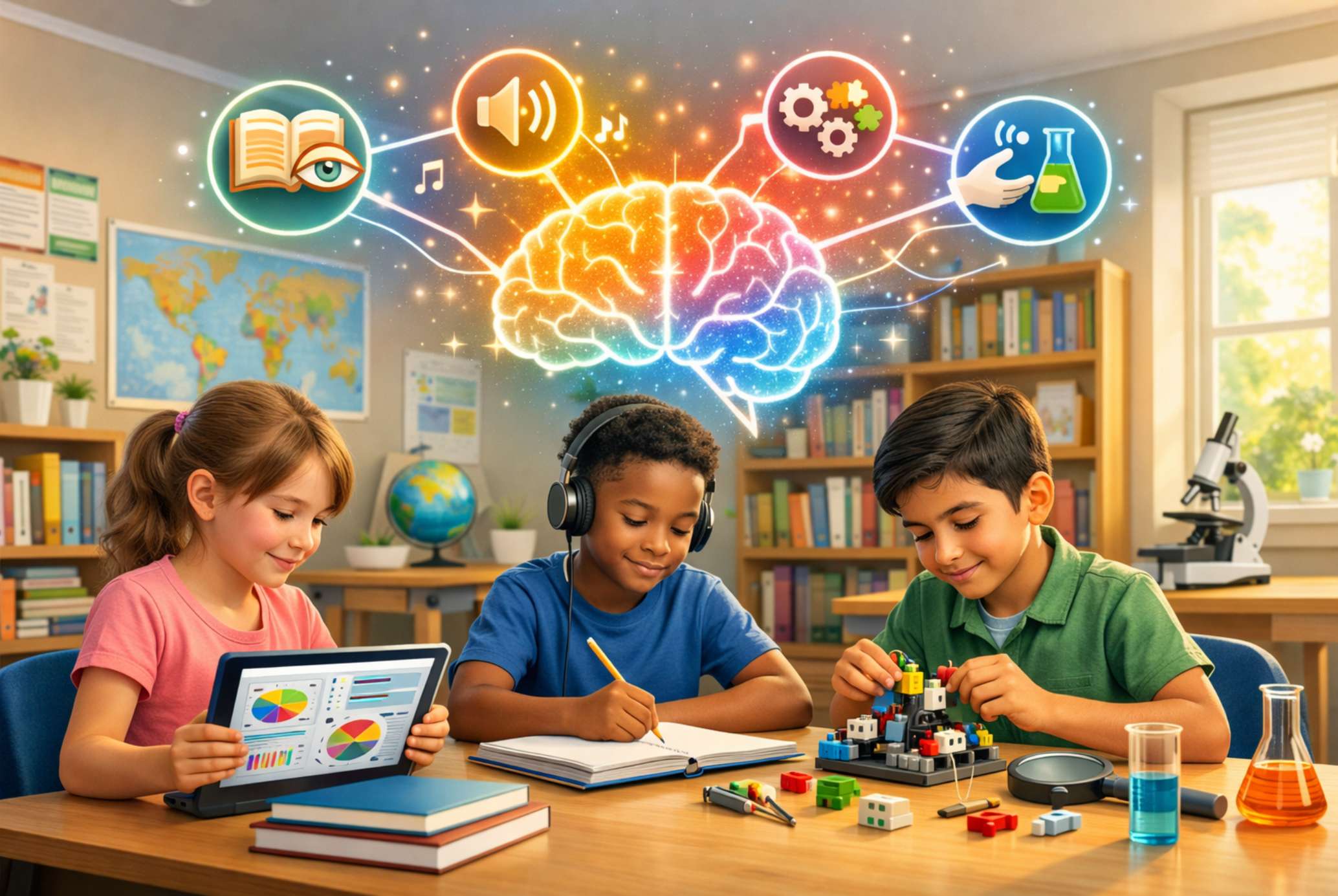
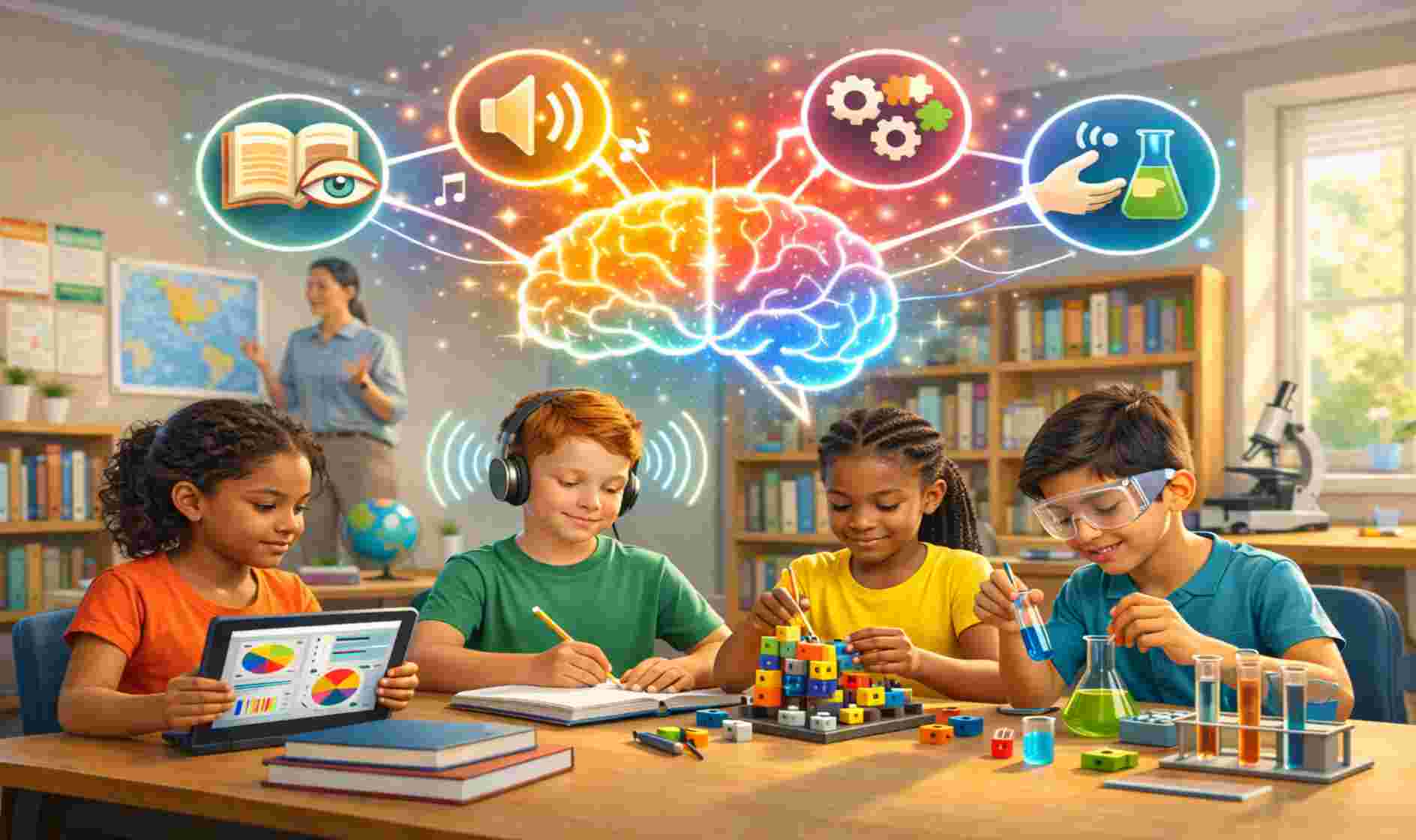
Some students learn best by seeing diagrams, others by listening to explanations, and some by doing activities or experiments. When teaching methods do not match a child’s natural learning preference, learning becomes frustrating. Understanding how children absorb information helps teachers and parents support them better and improve both confidence and academic performance.
What Are Learning Styles?
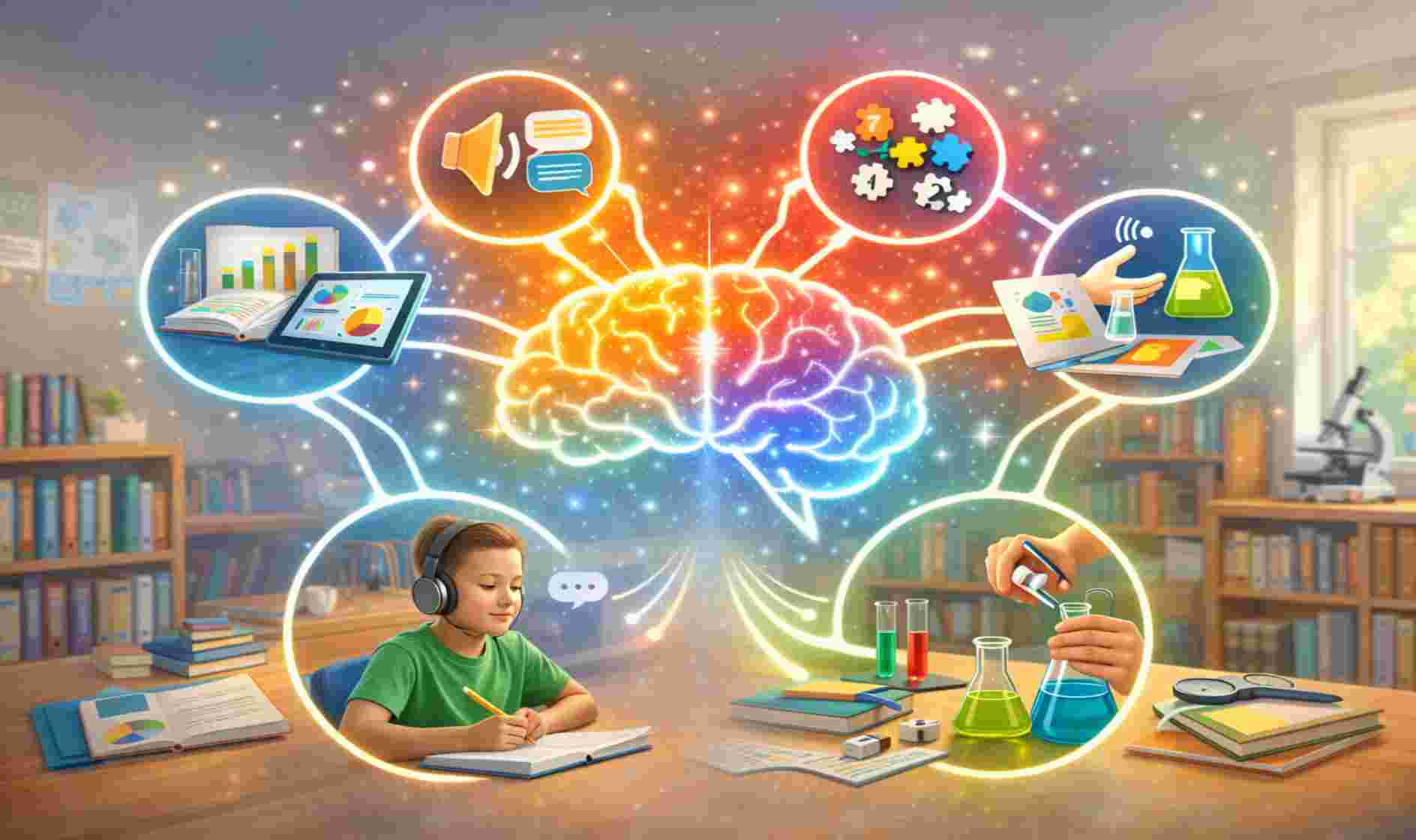
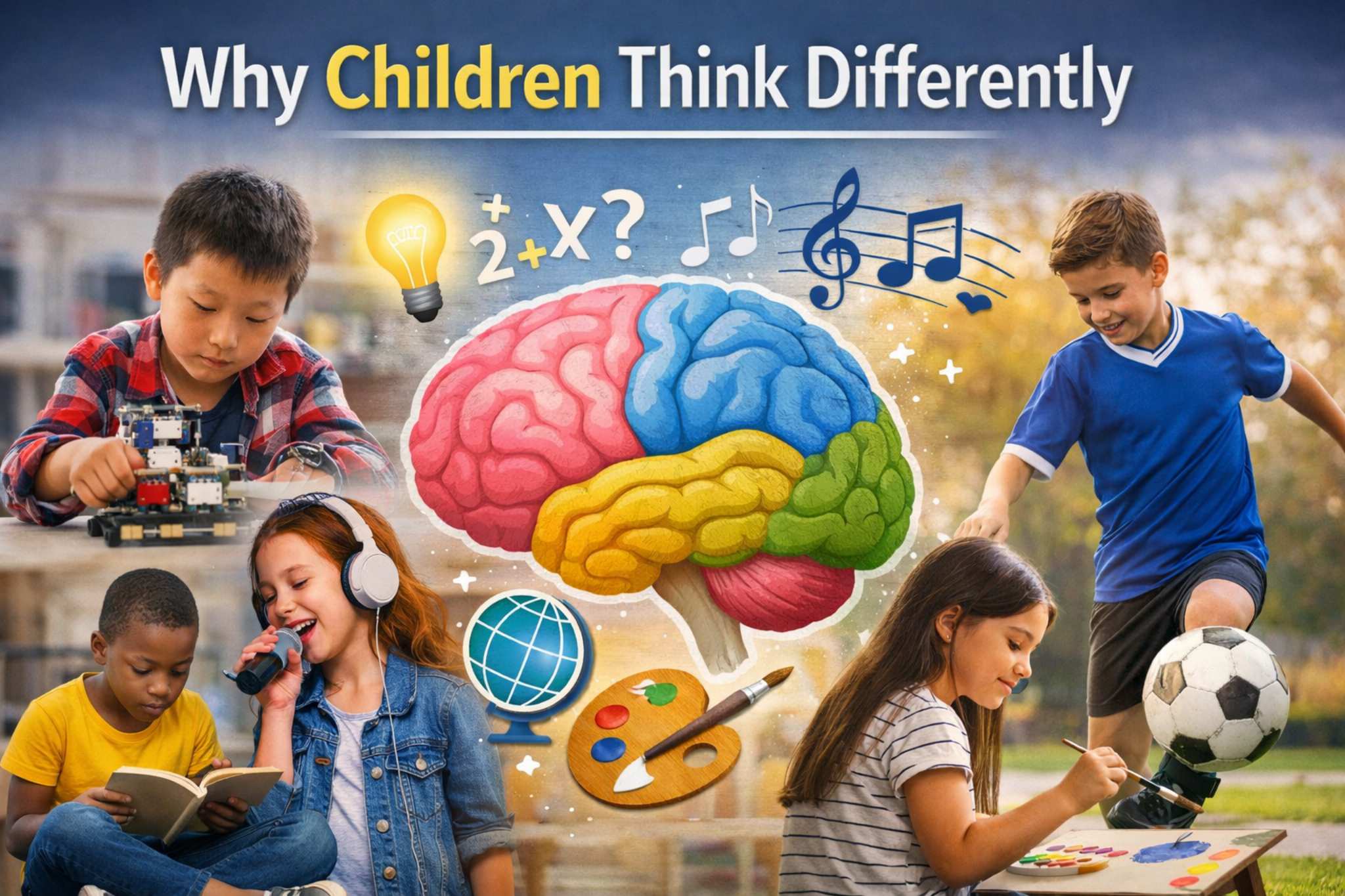
Learning styles describe the preferred ways individuals process, understand, and remember information. Educational psychologists widely categorize them into types such as visual, auditory, kinesthetic, and logical learning. According to educational research, adapting teaching methods to these preferences can significantly improve engagement and comprehension.
For example, visual learners understand concepts better through charts, diagrams, and videos, while auditory learners benefit from lectures, discussions, and storytelling. Kinesthetic learners grasp ideas through hands-on activities and experiments, highlighting how brain processing preferences shape learning effectiveness.
Connection Between Learning Styles and Multiple Intelligence
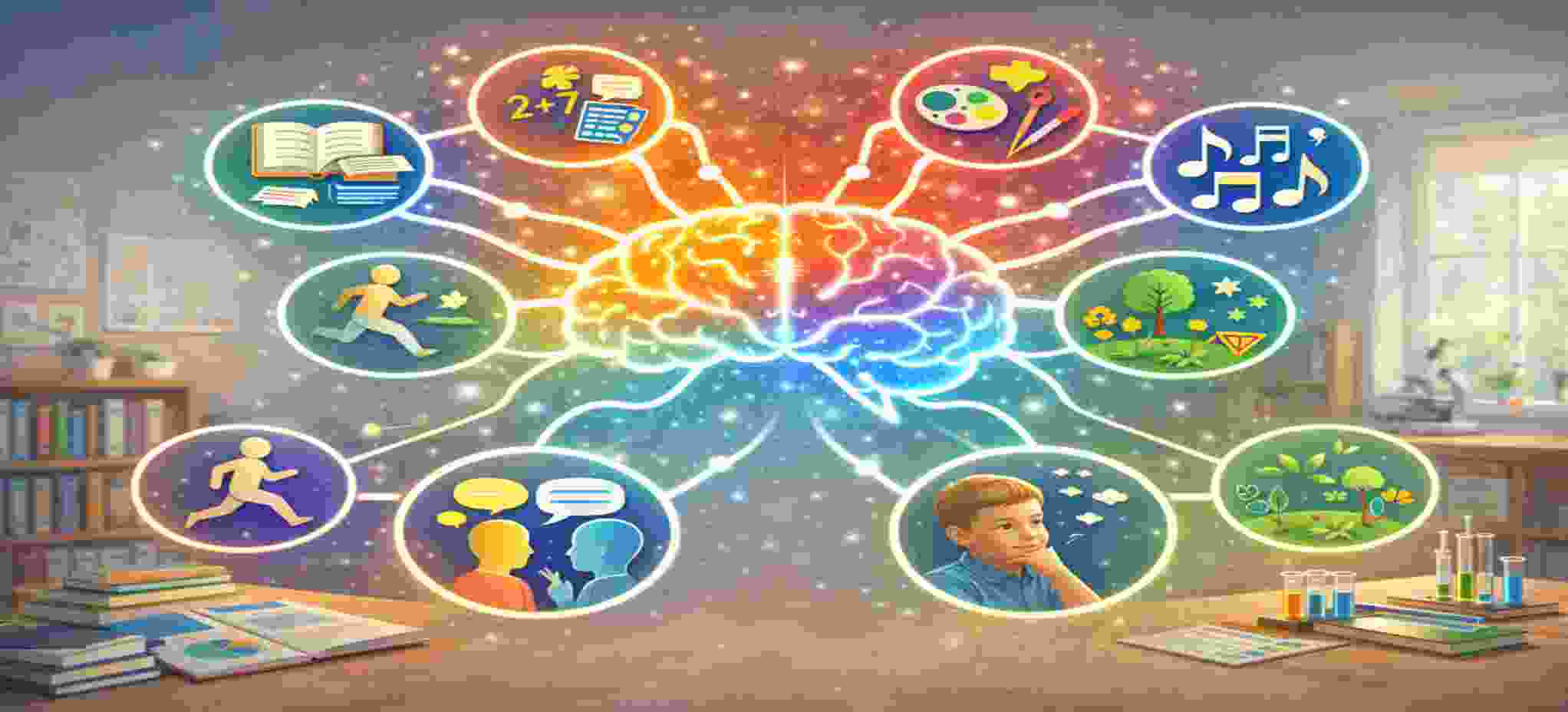
Learning styles are closely connected to Howard Gardner’s Multiple Intelligence Theory, which proposes that intelligence is not a single ability but a combination of different strengths. Gardner identified eight types of intelligence, including linguistic, logical-mathematical, spatial, musical, interpersonal, and kinesthetic abilities. Recognizing these strengths helps educators design teaching strategies that support diverse learners.
When teaching approaches align with a student’s natural strengths, learning becomes easier and more enjoyable. For example, a child with strong visual-spatial intelligence may understand concepts through diagrams and mind maps, while someone with bodily-kinesthetic intelligence learns better through experiments or physical activities. Studies indicate that active learning strategies can improve retention rates by up to 75%, emphasizing the importance of adapting teaching methods.