8 Types of Intelligence: Why Every Child Learns Differently

Understanding Gardner’s Multiple Intelligence theory helps identify how children learn differently and supports better academic choices, learning methods, and career guidance.

Services

Multiple Intelligence Assessment

Topic/Focus

Understanding Children’s Learning Styles

Author
Dr. Chetan Kapadnis

Not Every Child Learns the Same Way

Modern education often assumes that all students learn in similar ways and should perform equally in subjects like mathematics, language, and science. However, many children who struggle academically are not less intelligent—they simply think and learn differently. Traditional schooling systems tend to measure only a narrow set of abilities, which may overlook many other forms of intelligence that children naturally possess.

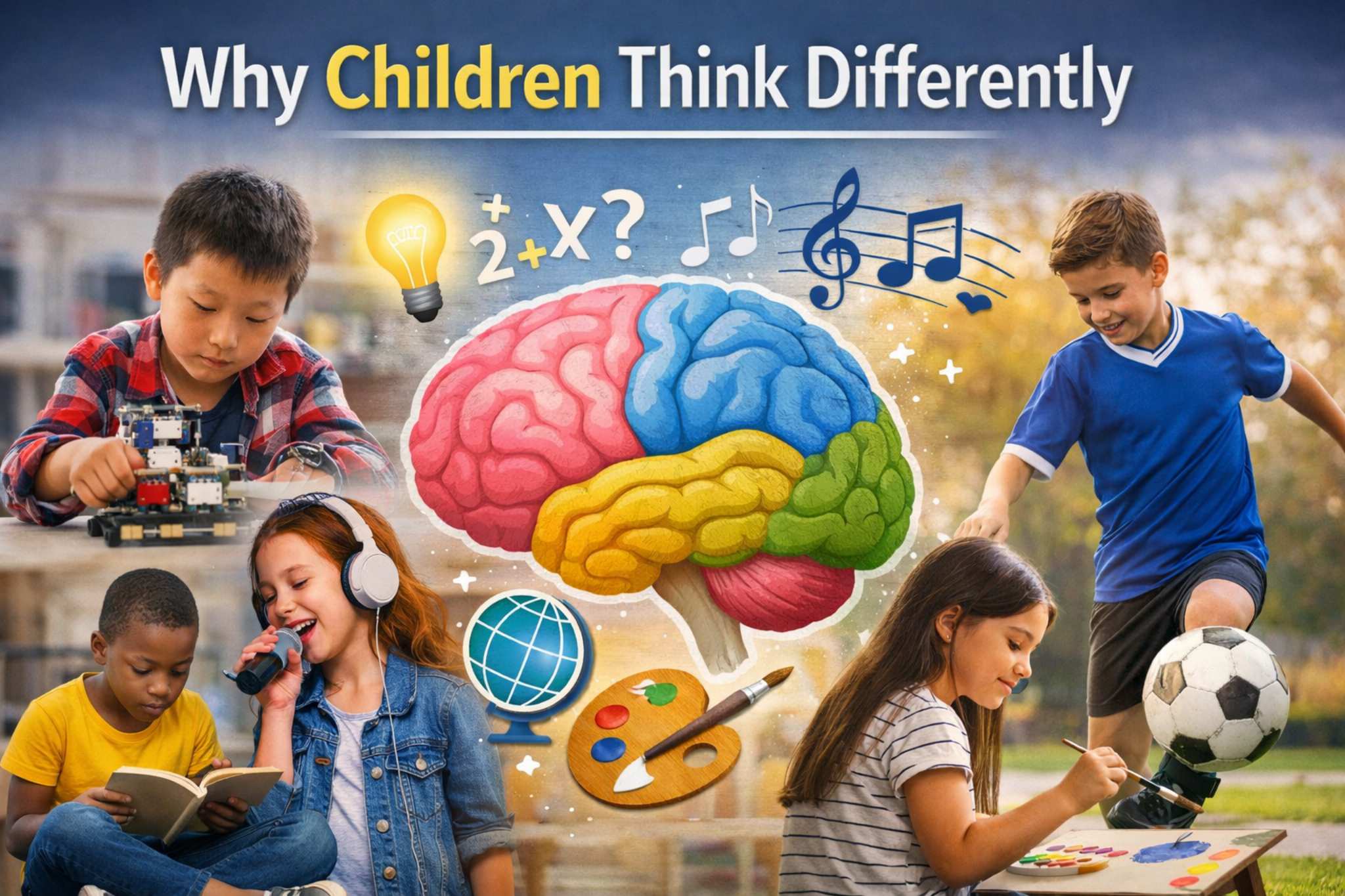
Psychologist Howard Gardner introduced the concept of Multiple Intelligence to explain that intelligence is not a single ability but a combination of different strengths. Some children understand concepts better through music, movement, visuals, or social interaction rather than textbooks or lectures. Recognizing these differences helps parents and educators create learning experiences that align with a child’s natural strengths, making education more engaging, effective, and meaningful.

What is Multiple Intelligence Theory?

Multiple Intelligence Theory was proposed by psychologist Howard Gardner in 1983. According to this theory, intelligence is not limited to IQ scores or academic performance. Instead, human intelligence consists of several different types that influence how individuals think, learn, and solve problems.

Gardner originally identified eight different types of intelligence, each representing a unique way people understand the world. Some individuals excel in logical reasoning or language, while others demonstrate strengths in music, visual thinking, interpersonal relationships, or physical movement. Recognizing these intelligence types helps educators and parents support diverse learning styles and talents among children.

The Eight Types of Intelligence

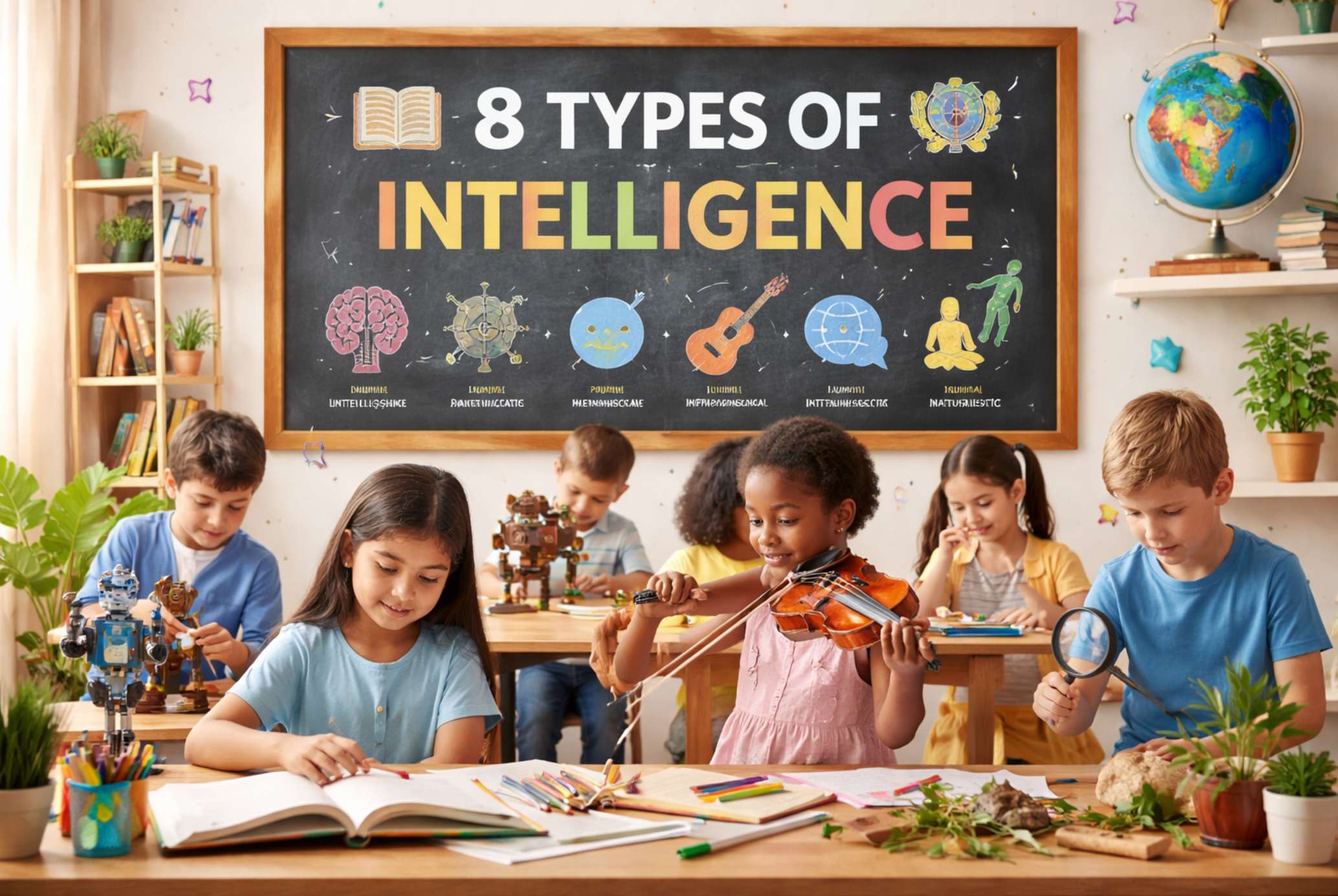
Howard Gardner identified eight distinct forms of intelligence that describe different ways people process information and interact with the world. These include linguistic, logical-mathematical, spatial, musical, bodily-kinesthetic, interpersonal, intrapersonal, and naturalistic intelligence. Every child possesses a unique combination of these abilities, which influences how they learn and express their potential.

For example, a child with strong linguistic intelligence may enjoy reading and storytelling, while a child with bodily-kinesthetic intelligence may learn best through movement, sports, or hands-on activities. Understanding these patterns helps teachers and parents adopt suitable learning strategies and career guidance approaches that match the child’s strengths rather than forcing a single academic path.

Schools Focus Linguistic Logical Skills
0 %
  • Linguistic Intelligence
  • Logical Intelligence
  • Spatial Intelligence
  • Musical Intelligence
  • Bodily Intelligence
  • Naturalistic Intelligence

Subscribe Newsletter