Discover how multiple intelligence shapes learning styles, strengths, and confidence, helping parents guide children toward meaningful academic and career paths.
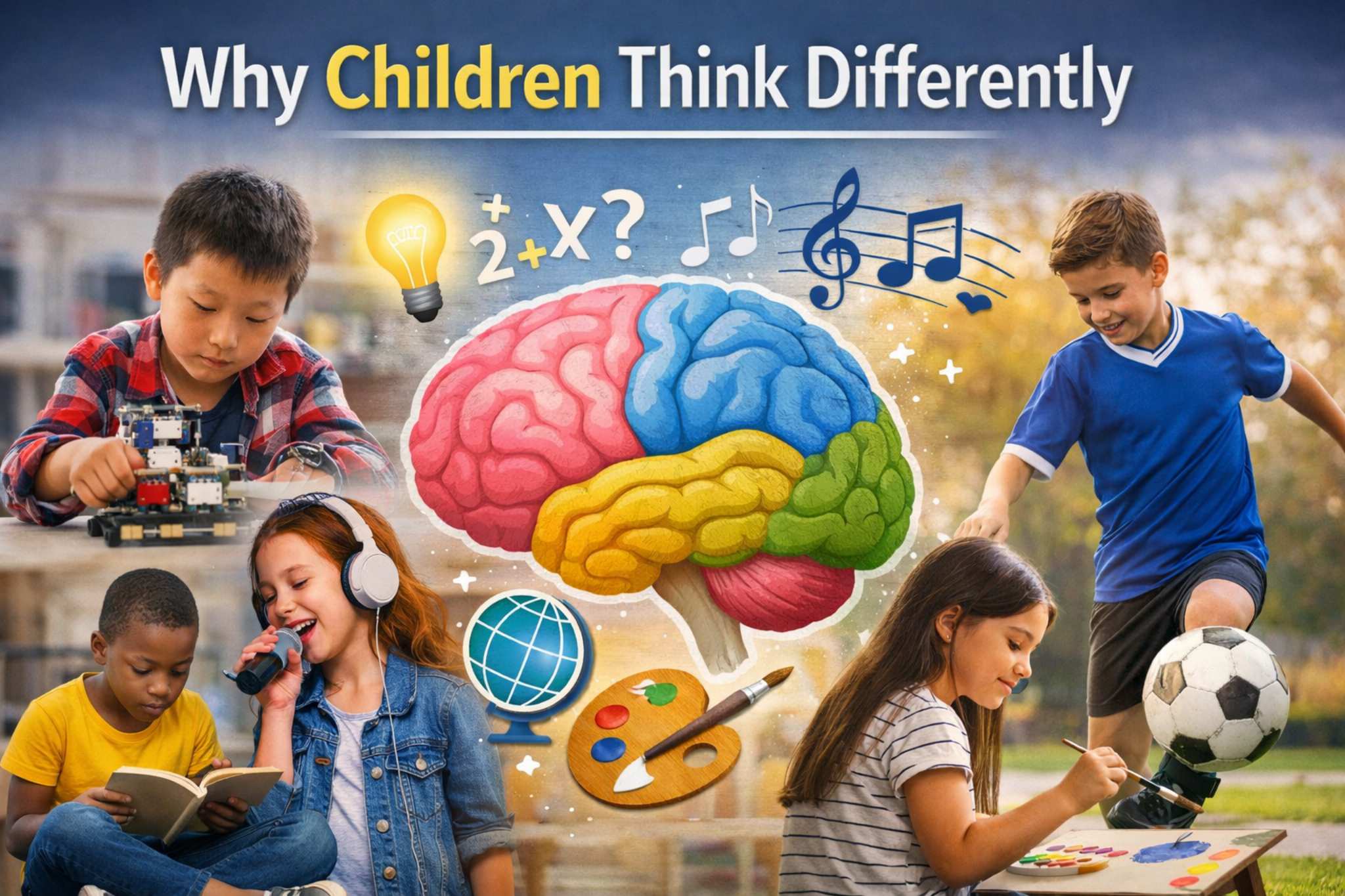
Children often get labelled as “good” or “weak” in studies based on traditional academic performance. But intelligence is much broader than marks in mathematics or language. Many children who struggle in conventional classrooms may possess exceptional abilities in creativity, music, leadership, sports, or problem-solving.
The concept of Multiple Intelligence explains that every child has a unique combination of abilities. When educators and parents recognize these differences, learning becomes more engaging, confidence improves, and children begin to see their own strengths more clearly.
Multiple Intelligence is a theory proposed by psychologist Howard Gardner that challenges the traditional belief that intelligence is a single ability measured only through IQ tests or academic performance. According to this theory, human intelligence is diverse and multifaceted. Gardner suggested that individuals possess different types of intelligence that shape how they understand the world, process information, and approach learning. These intelligences influence the way people think, communicate, create, and solve problems in everyday life.
Rather than assuming that all children learn best through the same methods, the theory highlights that every individual has a unique combination of strengths. Some may excel in logical reasoning or language, while others may show strong abilities in music, art, physical movement, social interaction, or understanding nature. Recognizing these different intelligences helps educators and parents support children in ways that align with their natural abilities, making learning more engaging, effective, and confidence-building.
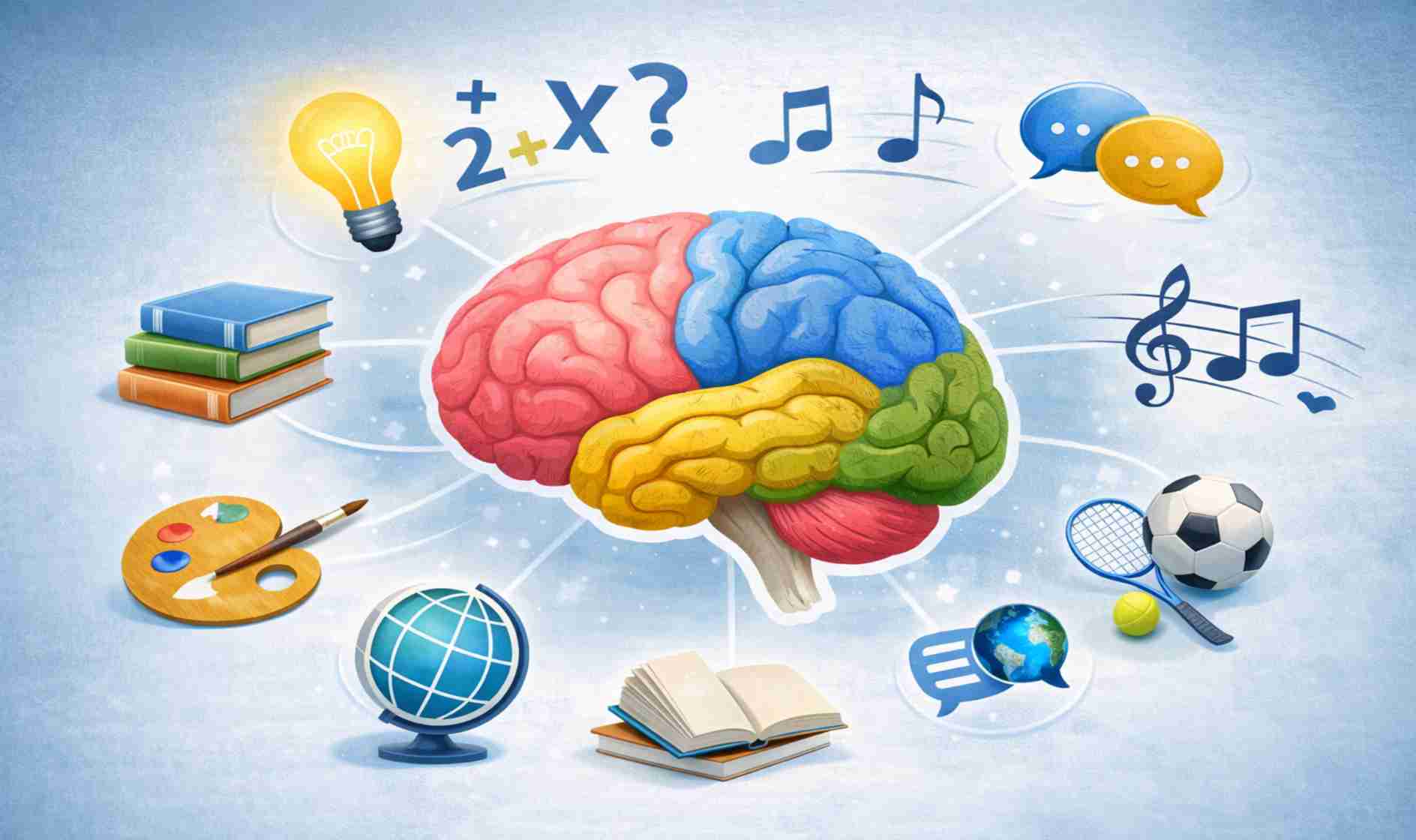

Every child processes information differently, and this difference plays an important role in how effectively they understand and remember concepts. Some children grasp ideas quickly through visual aids such as diagrams, charts, or images, while others learn better through hands-on activities and movement. A few students may respond strongly to music or rhythm, whereas others prefer logical reasoning, problem-solving, or structured explanations. Social interaction also plays a key role for many learners, as discussing ideas with peers or working in groups helps them clarify and strengthen their understanding.
The concept of Multiple Intelligence helps identify these natural learning preferences and highlights that there is no single “correct” way to learn. When educators and parents recognize these differences, teaching methods can be adapted to match a child’s strengths and interests. This approach not only improves learning outcomes but also builds confidence and motivation. In the context of career guidance, understanding how a child learns can provide valuable insights into their potential strengths, helping them explore academic pathways and career options that align with their natural abilities rather than forcing them into a one-size-fits-all learning model.


Ambegaon Budruk, Katraj, Pune, Maharashtra, India