DMIT Basics: How Fingerprints Reveal Learning Styles

Understand how fingerprint patterns relate to brain development and learning preferences, and how DMIT helps identify individual cognitive strengths.

Services

DMIT Learning Insights

Topic/Focus

Fingerprint Based Learning Analysis

Author

Dr. Chetan Kapadnis

Your Fingerprints May Reveal How You Learn

Every individual is born with unique fingerprints that remain unchanged throughout life. Beyond identification, researchers have long studied the patterns of fingerprints and their connection with human brain development. Dermatoglyphics, the scientific study of these patterns, suggests that fingerprints form during early fetal development along with the brain and nervous system.

Because both fingerprints and the brain develop simultaneously during pregnancy, some researchers believe fingerprint patterns may reflect aspects of neurological development. Dermatoglyphics Multiple Intelligence Test (DMIT) is based on this idea. It attempts to analyze fingerprint patterns to understand possible learning styles, cognitive tendencies, and natural abilities in children and adults.

What Is Dermatoglyphics?

Dermatoglyphics is the scientific study of the ridge patterns present on fingers, palms, and soles. These patterns begin forming between the 13th and 19th week of fetal development and remain permanent throughout life, making them useful for identification and scientific study.

Scientists have used dermatoglyphics in fields like genetics, anthropology, and medical research. By examining ridge patterns such as loops, whorls, and arches, researchers can explore relationships between biological development and certain physical or neurological traits.

How DMIT Connects Fingerprints and Learning

The Dermatoglyphics Multiple Intelligence Test (DMIT) is based on the belief that fingerprint patterns reflect underlying brain development. Since fingerprints and the nervous system develop at the same stage during pregnancy, proponents of DMIT suggest that ridge patterns may provide clues about cognitive tendencies and learning preferences.

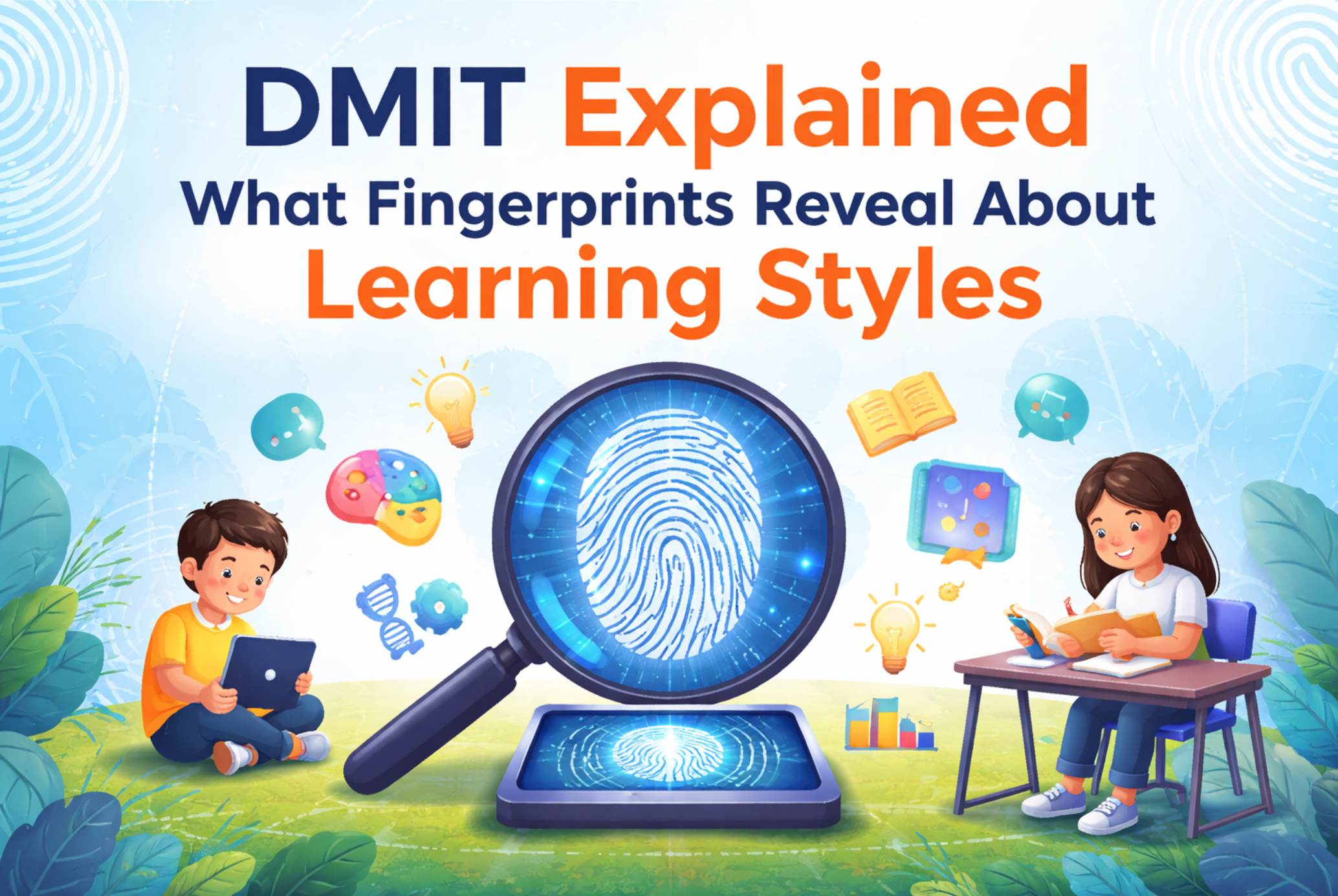
Using fingerprint scans, DMIT reports attempt to identify potential strengths related to multiple intelligences such as logical thinking, creativity, communication, or interpersonal skills. The idea is not to label abilities but to provide insights that may help parents, educators, and individuals understand preferred learning styles and support more personalized education approaches.

Loop Patterns - Most common fingerprint type globally
0 %
  • Cognitive Strengths
  • Language Skills
  • Brain Dominance
  • Talent Areas
  • Personality Traits
  • Intelligence Patterns

Subscribe Newsletter