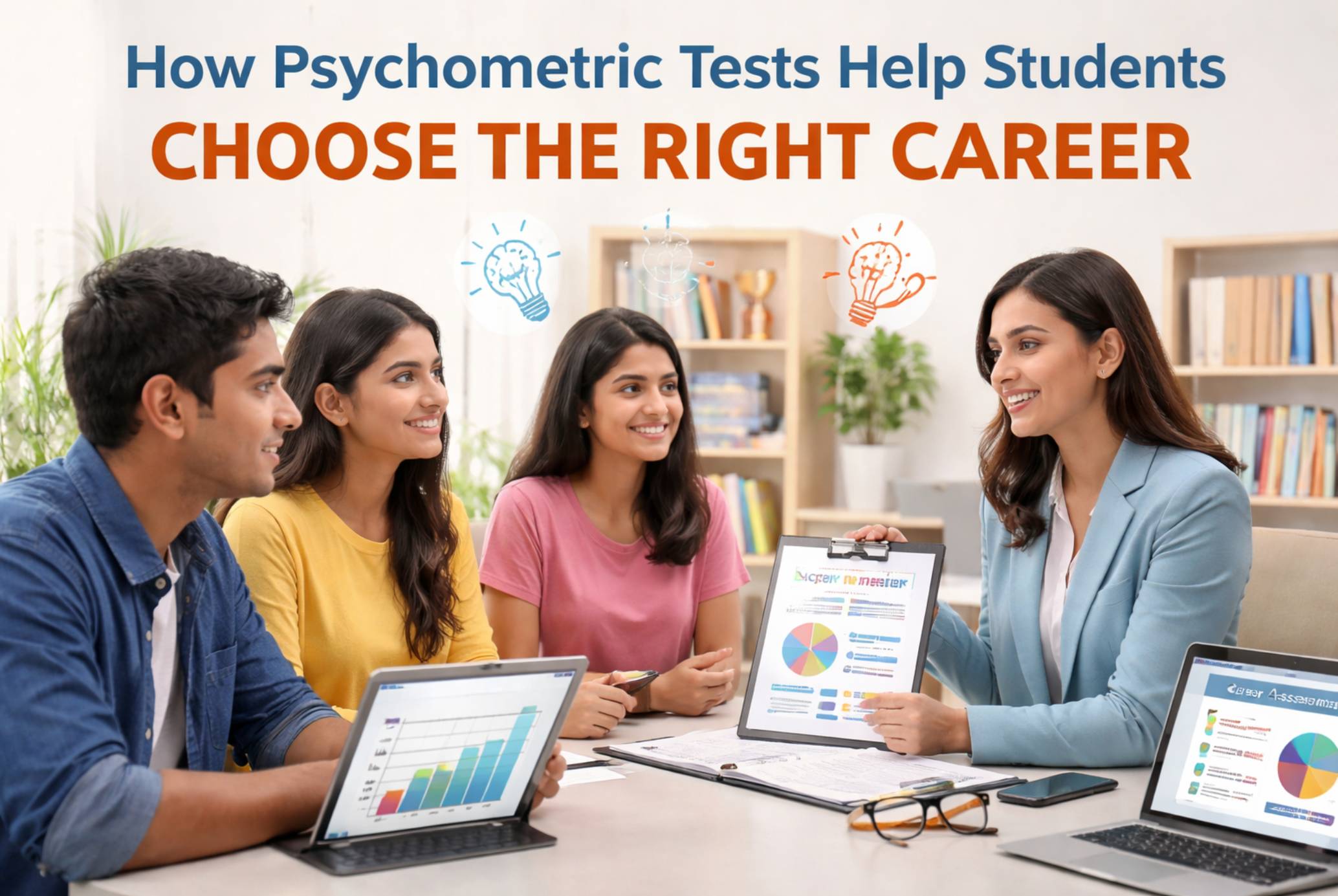
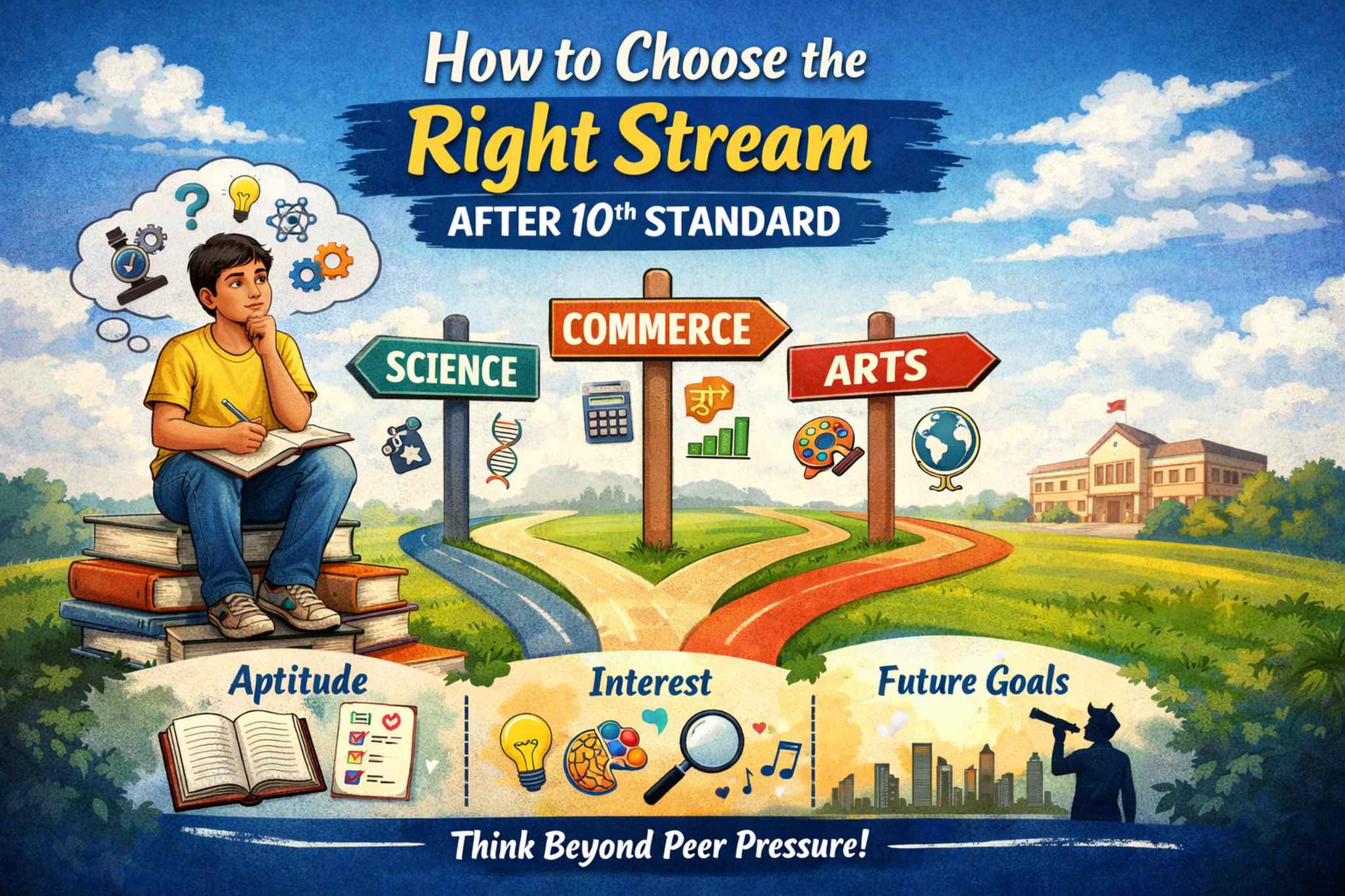
Psychometric assessments help students understand aptitude, interests, and personality traits, enabling more informed and confident career and stream decisions.

Choosing a career is one of the most important decisions in a student’s life, yet many students make this choice with very little guidance. Often, decisions are influenced by family expectations, peer pressure, popular trends, or limited information about career options. As a result, many students end up selecting streams or courses that do not align with their true strengths and interests. This mismatch can lead to frustration, poor academic performance, and lack of motivation in the long run.
Psychometric assessments offer a scientific and structured way to understand a student’s natural abilities and preferences. Instead of relying on assumptions or opinions, these assessments use standardized tests to evaluate different aspects of a student’s cognitive and behavioral profile. By analyzing patterns related to aptitude, interests, personality traits, and intelligence styles, psychometric tools provide objective insights that help students make informed and confident career decisions.
A psychometric assessment is a standardized testing method designed to measure various psychological attributes of an individual. In the context of career guidance, these assessments evaluate key aspects such as aptitude, interests, personality traits, and cognitive strengths. The tests are carefully designed using scientific principles so that the results are reliable, unbiased, and comparable across individuals.
These assessments help identify how a student thinks, learns, solves problems, and interacts with different environments. By combining multiple dimensions of evaluation, psychometric assessments create a comprehensive profile of the student. This profile helps career counselors and students understand which academic streams and career clusters align best with the student’s natural potential and long-term satisfaction.
Psychometric assessments evaluate several dimensions of a student’s abilities and preferences to create a holistic career profile. These typically include aptitude, interests, personality traits, and patterns of intelligence. Each component provides a different perspective on how a student learns, thinks, and engages with tasks or environments.
When these components are analyzed together, they offer deeper insight into suitable career paths. For example, a student with strong logical aptitude and analytical thinking may thrive in engineering or data-related fields, while someone with high social interest and communication skills may perform well in teaching, psychology, or management. This integrated analysis helps avoid random career choices.

Ranchview Dr. Richardson, California 62639
Newyork, 62639
California 62639