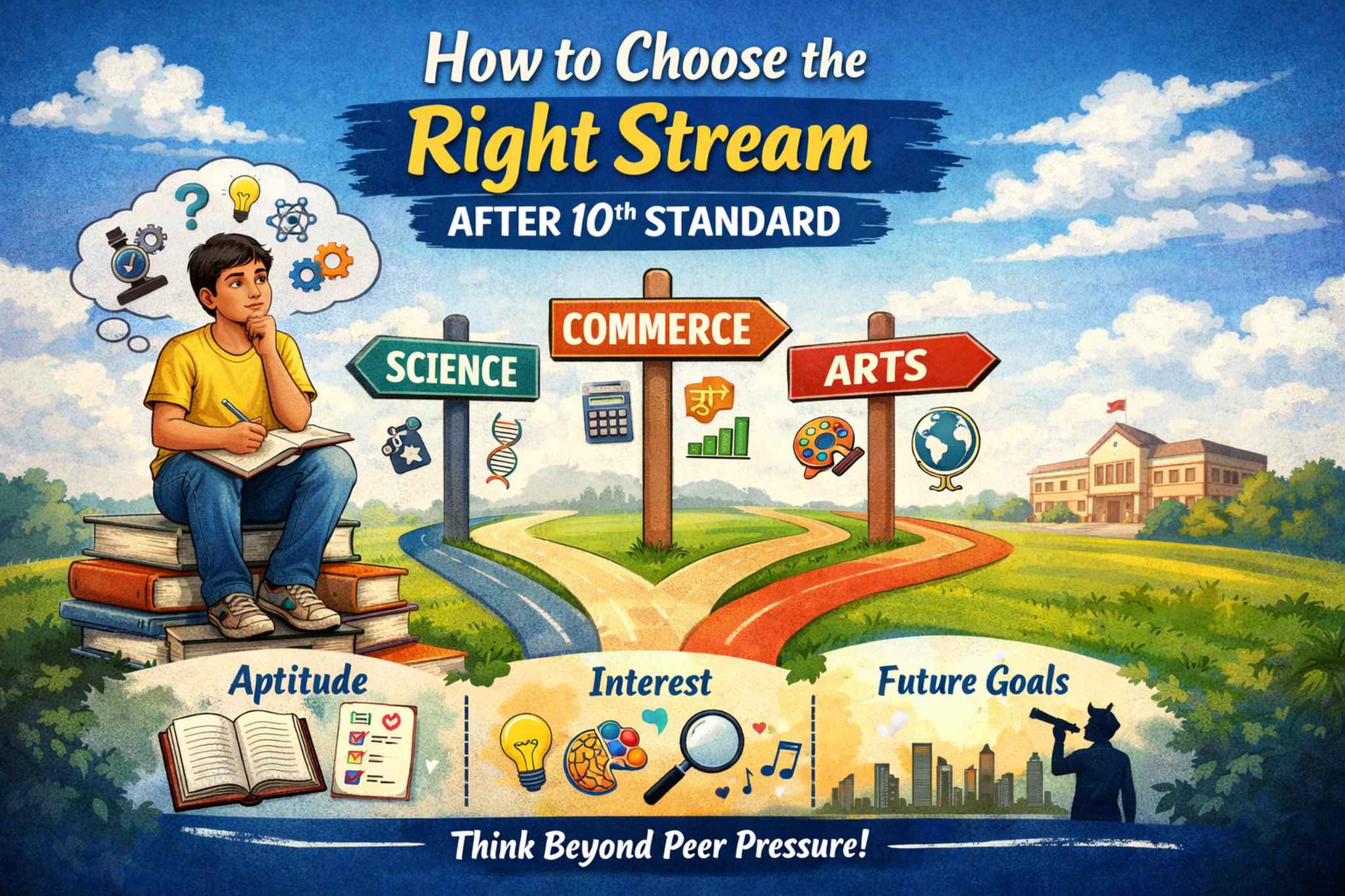
How to Choose the Right Stream After 10th Standard

A structured approach to selecting Science, Commerce, or Arts based on aptitude, interest, and long-term direction – not peer pressure.

Services

Stream Selection

Topic/Focus

Stream Selection After 10th

Author
Prof. (Dr.) Chetan Kapadnis

The First Big Academic Decision

Turning the page from 10th standard to higher secondary education is one of the first major academic decisions in a student’s life. It feels heavy because this choice begins shaping future careers, opportunities, and identity. Yet, many students choose streams based on what friends are taking, what seems “tough” or “easy,” or what parents vaguely suggest.

This blog brings clarity. It offers a structured, reflective, and actionable framework to help students and parents arrive at a confident and well-aligned decision: Science, Commerce, or Arts. The goal? A choice grounded in aptitude, genuine interest, and long-term purpose rather than pressure or trend.

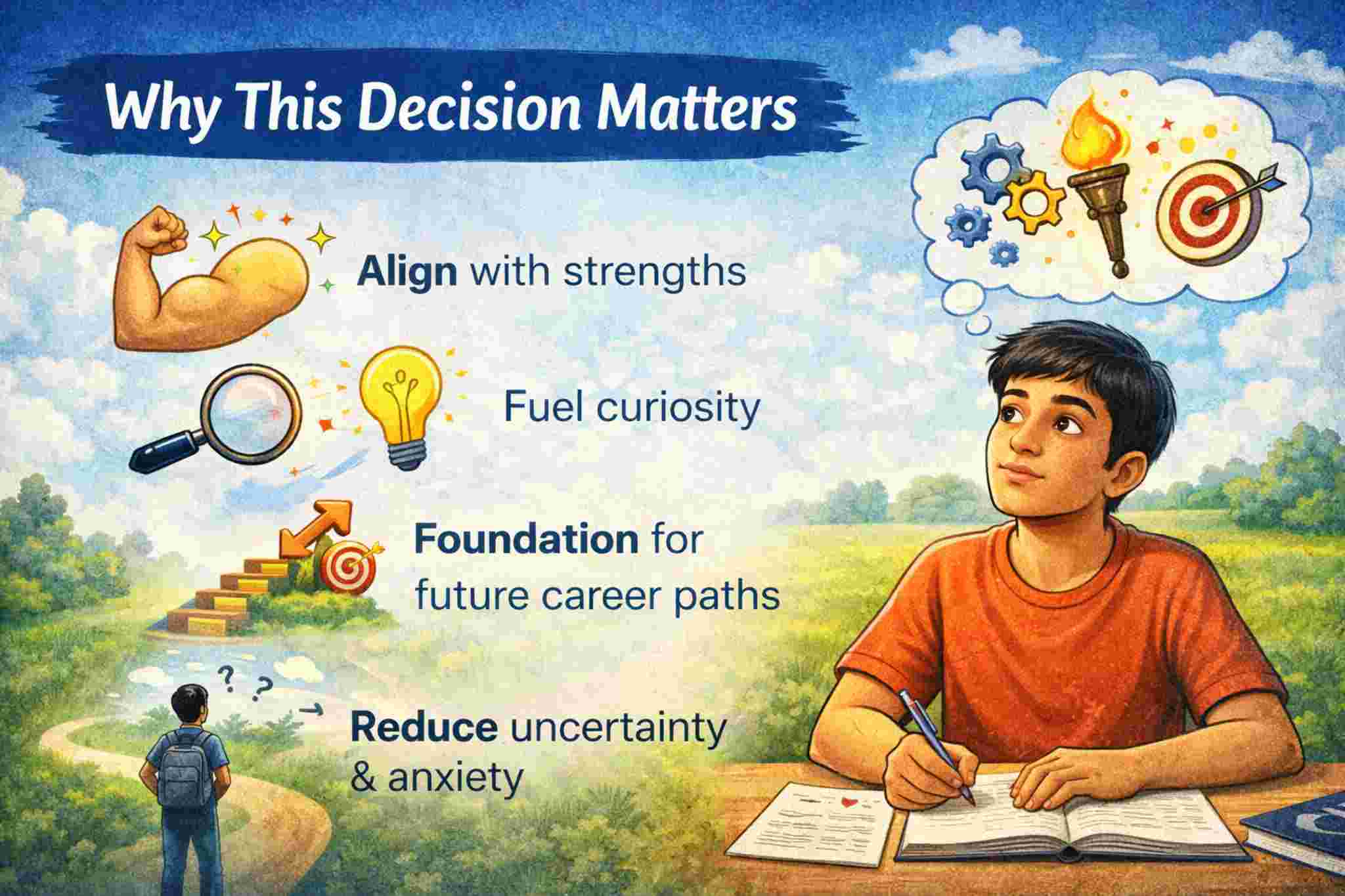
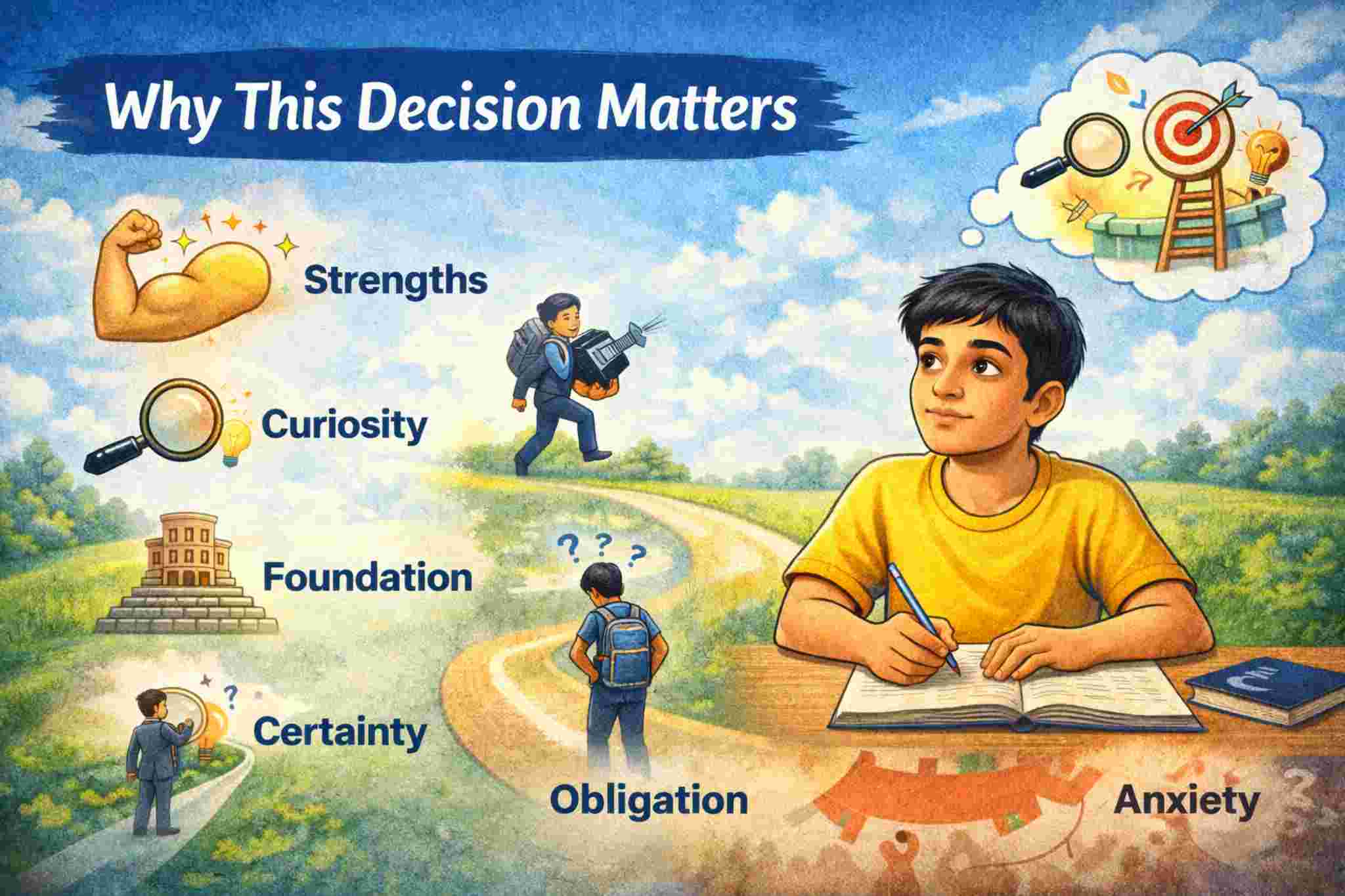
Why This Decision Matters

Choosing a stream isn’t just picking subject combinations for the next two years — it’s about:

  • Aligning with strengths rather than weaknesses

  • Fueling curiosity instead of obligation

  • Building a foundation for future career paths

  • Reducing uncertainty and anxiety around the next academic step

The right choice increases engagement, improves performance, and makes learning more enjoyable.

Step 1: Understand the Options

Before choosing, it’s essential to know what each stream broadly offers:

🔬 Science

Ideal for students who enjoy analytical thinking, experiments, problem-solving, and technical subjects.
Typical Subjects: Physics, Chemistry, Mathematics/Biology
Future Areas: Engineering, Medicine, Research, Data Science, Architecture

📊 Commerce

Suited for those interested in business, markets, money-management, and organization.
Typical Subjects: Accountancy, Business Studies, Economics, Mathematics
Future Areas: Finance, CA/CS/CFA, Marketing, Entrepreneurship

🎨 Arts / Humanities

Best for creative minds and those passionate about people, culture, language, and expression.
Typical Subjects: History, Psychology, Geography, Political Science, Literature
Future Areas: Design, Media, Law, Social Services, Psychology, Public Policy

Career Paths Across 3 Streams
0 +
  • Sci, Commerce, Arts Overview
  • Core Subject Combinations
  • Required Skills & Aptitude
  • Linked Career Pathways
  • Higher Education Opportunities
  • Stream Myths Debunked
sci_arts_commerce_streams

Step 2: Assess Your Aptitude

Your aptitude is your natural potential — the areas where learning feels intuitive.

🔍 Ask yourself:

  • Which subjects come easily?

  • Where do I score naturally without excessive strain?

  • What kind of questions do I enjoy solving?

Tools to Help:

  • School assessments

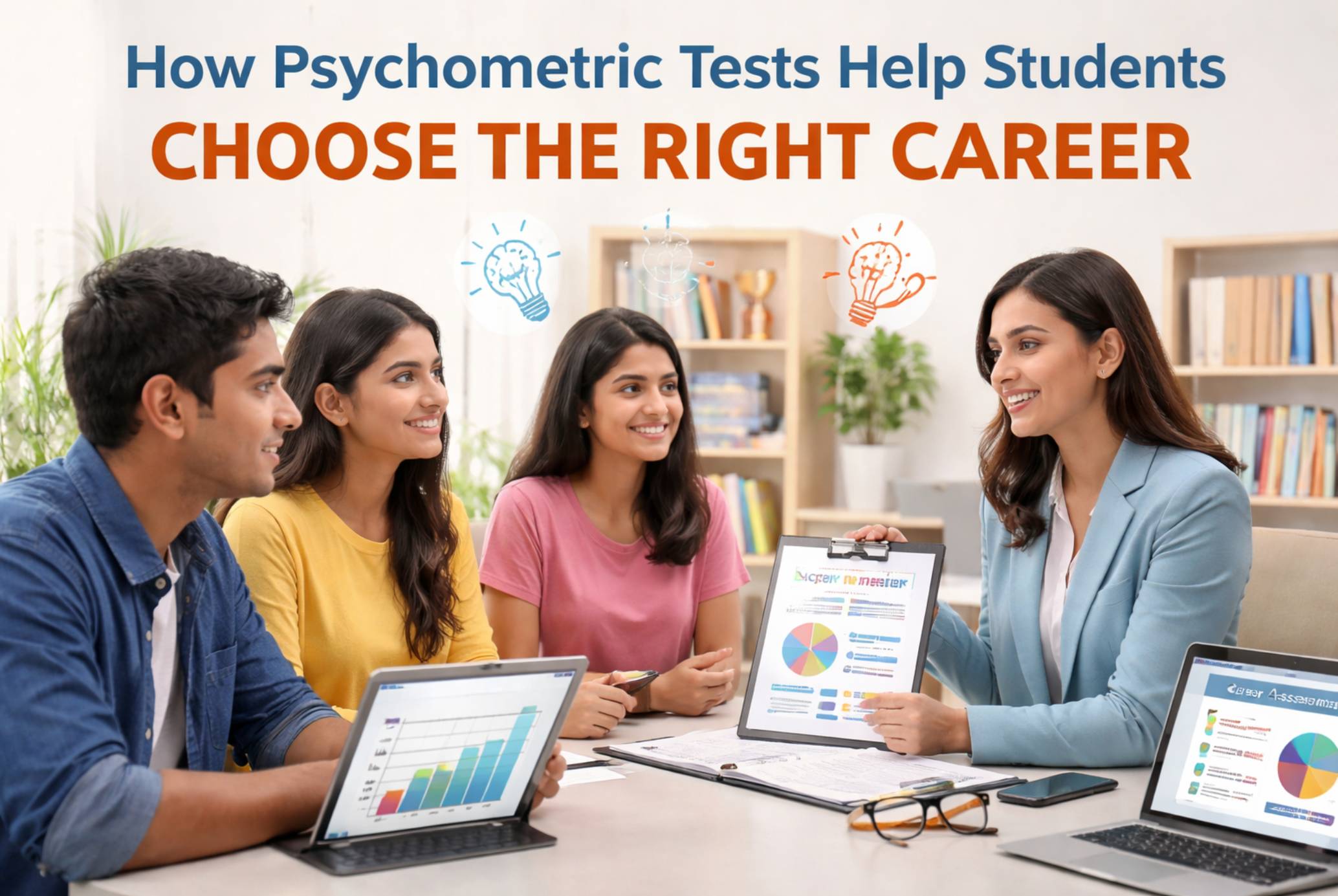
  • Psychometric tests

  • Career aptitude quizzes

Step 3: Gauge Your Genuine Interest

Interest fuels effort. Even if you’re good at something, lack of interest can make the journey exhausting.

✔️ Reflect on questions like:

  • Which classroom sessions do I enjoy most?

  • Which topics do I explore outside of homework?

  • What problems am I curious to solve?

📌 Interest + Aptitude = Engagement.

Step 4: Define Long-Term Direction

Think beyond 10+2 — consider where you see yourself in 10 years.

Not necessarily a job title, but:

  • Do you enjoy research?

  • Are you drawn to business and markets?

  • Do you like storytelling, design, or people-centric work?

Visualizing your future helps shape your present choices.

Step 5: Talk to Mentors, Not Just Peers

Peers may share their struggles or choices, but their path isn’t your path.

Talk to:

  • Teachers

  • Career counsellors

  • Seniors who have recently made the choice

  • Professionals in areas you’re curious about

Real conversations give clarity.

Step 6: Evaluate Pros & Cons — Honestly

CriteriaScienceCommerceArts
InterestHigh/Med/LowHigh/Med/LowHigh/Med/Low
AptitudeHigh/Med/LowHigh/Med/LowHigh/Med/Low
Future FitYes/NoYes/NoYes/No
ConfidenceHigh/Med/LowHigh/Med/LowHigh/Med/Low

Common Myths — Busted

Science is only for “smart students”
👉 Reality: It’s for those with interest in analytical learning.

Commerce is only about business
👉 Reality: It’s also about logical thinking, economics, and strategy.

Arts has limited options
👉 Reality: Arts opens doors into media, psychology, design, law, and public service.

Conclusion — Choose with Intent

Choosing the right stream after 10th isn’t about popularity or pressure — it’s about self-discovery, alignment, and direction.

When a student evaluates:
✔ Strength
✔ Interest
✔ Future aspirations
✔ Practical options

…the choice becomes empowering, not stressful.

Remember:
This choice shapes your next step — but it doesn’t limit your entire future.
Multiple paths can lead to success — what matters most is where you begin and why.


Subscribe Newsletter