Choosing the right career or academic stream can be one of the most important decisions in a person’s life. With numerous tools and assessment methods available, two approaches often discussed are Psychometric Assessments and Dermatoglyphics Multiple Intelligence Test (DMIT). While both aim to provide insights into an individual’s abilities and preferences, they are based on very different assumptions, methodologies, and outcomes.
In this guide, we’ll break down what each assessment involves, how they differ from each other, and when to use them effectively for stream and career decisions.
What Is a Psychometric Assessment?
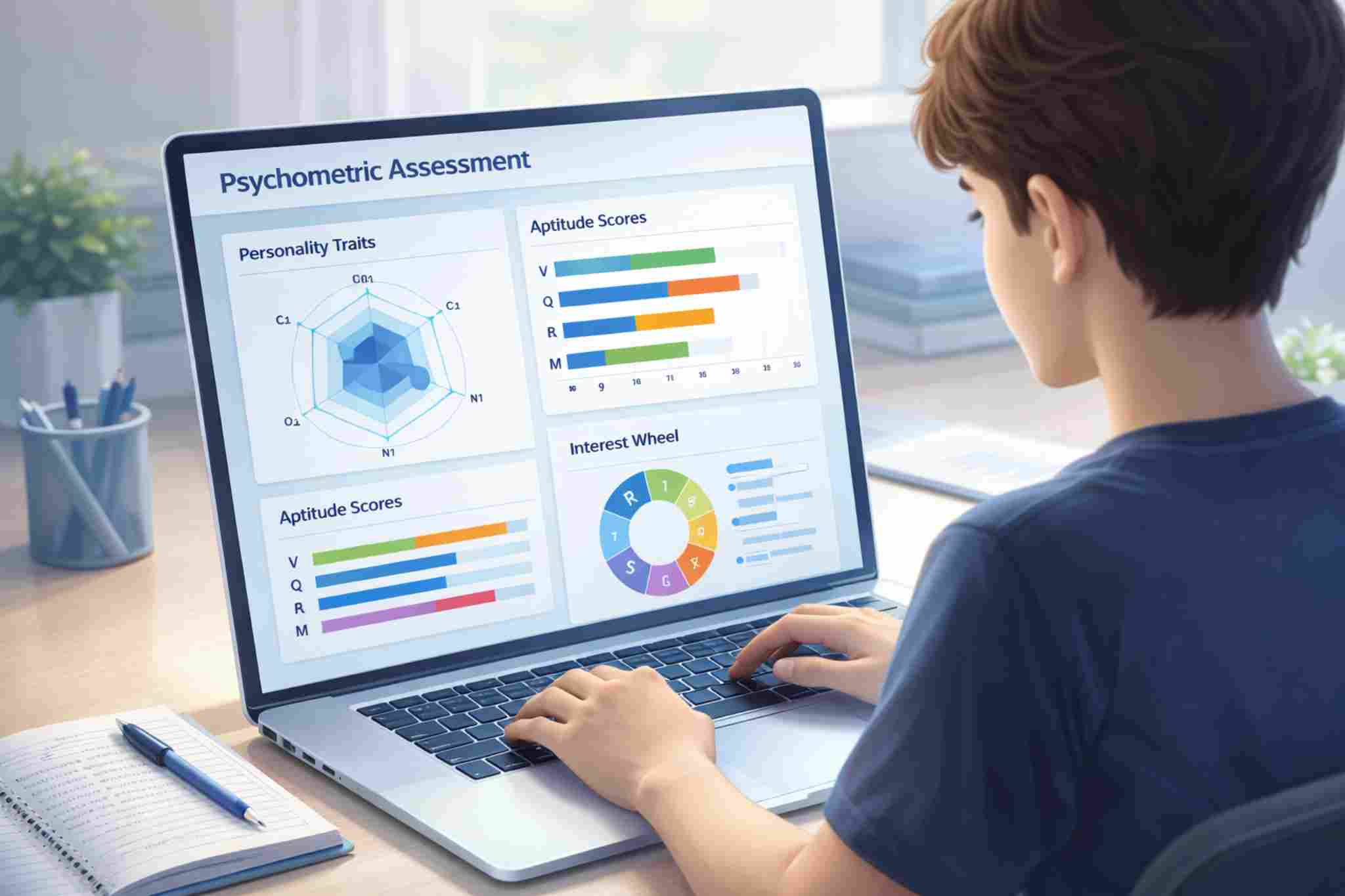
Psychometric assessments are scientifically developed tools that measure psychological attributes such as:
-
Personality traits
-
Aptitudes
-
Motivations
-
Cognitive abilities
-
Interest inventories
These assessments are grounded in decades of research in psychology and are widely used in educational and career counselling, organizational hiring, leadership development, and talent management.
Core Features:
-
Based on standardized psychological models (e.g., Big Five personality traits).
-
Uses validated questionnaires and scoring systems.
-
Produces reliable, norm-referenced results.
-
Links directly to behavioural tendencies, learning styles, and occupational match.
Typical Uses:
✔ Understanding personality strengths and challenges
✔ Identifying cognitive strengths (e.g., logical reasoning, verbal ability)
✔ Career guidance and stream selection
✔ Team fit and leadership potential
What Is DMIT (Dermatoglyphics Multiple Intelligence Test)?
DMIT (Dermatoglyphics Multiple Intelligence Test) claims to analyse fingerprints and relate ridge patterns to cognitive preferences and intellectual strengths. The idea is that fingerprint patterns — formed before birth — correlate with brain development and multiple intelligences.
Unlike psychometrics, DMIT’s scientific basis is not supported by mainstream neuroscience or psychometric research.
Core Features:
-
Uses fingerprints to interpret learning styles and intelligence types.
-
Claims to map 8–10 kinds of “intelligences” (e.g., linguistic, logical, spatial).
-
Often marketed for children’s learning guidance.
Typical Uses:
✔ Identifying preferred learning modalities
✔ Suggesting career or subject interests based on fingerprint analysis
- Fingerprint pattern analysis
- Multiple intelligence mapping
- Learning style identification
- Brain dominance interpretation
- Inborn potential profiling
- Career inclination suggestions
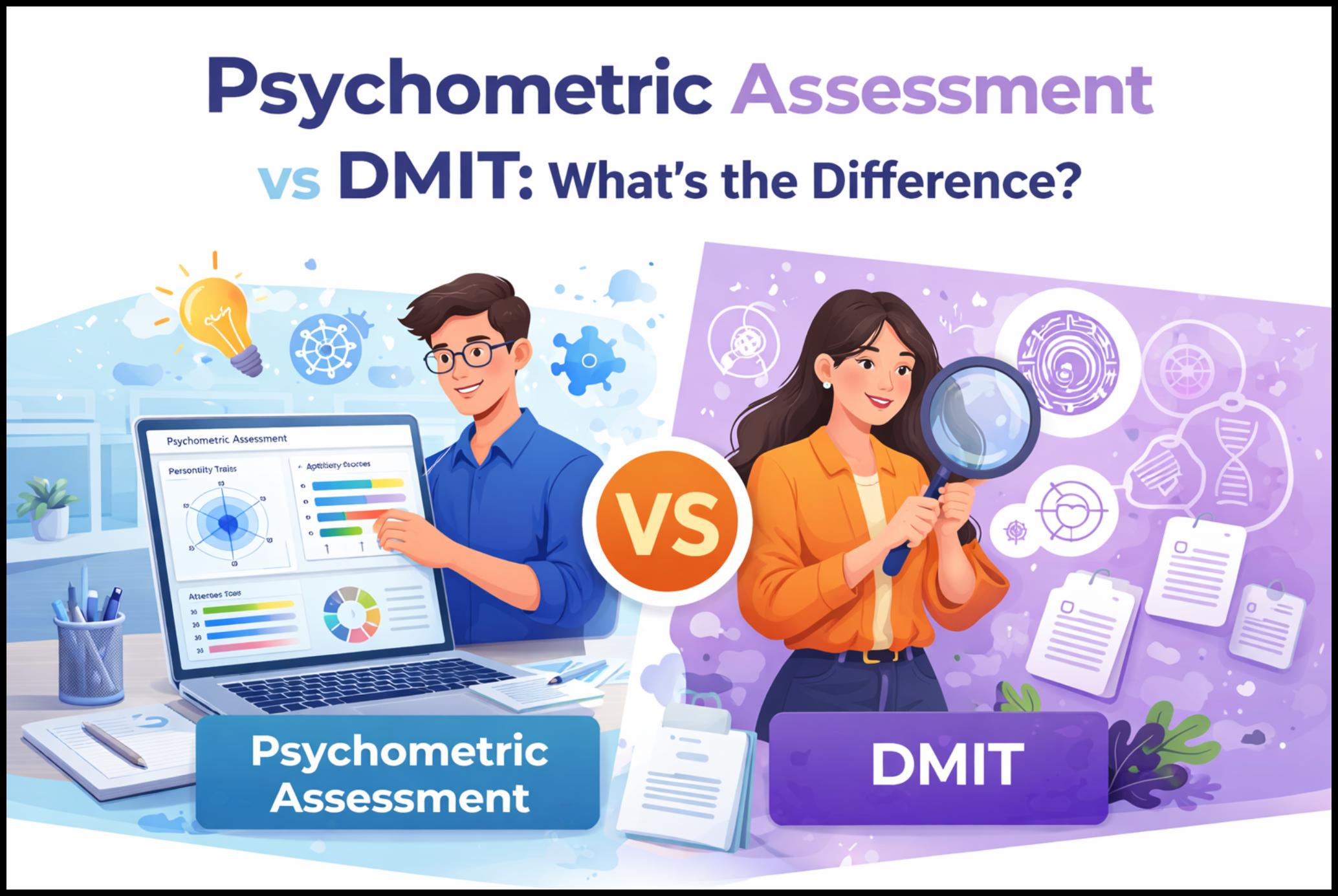
Psychometric Assessment vs DMIT: Key Differences
| Aspect | Psychometric Assessment | DMIT |
|---|
| Scientific Foundation | Strong psychological research base | Not scientifically validated |
| Methodology | Questionnaires & task-based measures | Fingerprint pattern interpretation |
| Outcome Validity | High reliability & consistency | Questionable academic support |
| Use in Counselling | Widely accepted in career guidance | Often supplementary or promotional |
| Best For | Deep self-awareness, career alignment | Learning style exploration (interpretive) |
Which One Should You Choose?
When to Use Psychometric Assessments
If your goal is to:
-
Make informed career or academic stream decisions
-
Understand personality and aptitude objectively
-
Explore careers aligned with cognitive strengths
Then psychometric assessment is the ideal choice. It offers research-validated insights and practical applicability for decision-making.
If you want:
DMIT may be used as a complementary tool — not the sole basis for serious career decisions.
In Summary
Psychometric Assessments and DMIT both aim to help individuals understand themselves better, but they differ fundamentally in how they operate and the strength of their conclusions.
-
Psychometric assessments = research-based, reliable, decision-oriented
-
DMIT = interpretive, exploratory, not scientifically validated
For decisions that matter — like choosing a stream or career path — it’s best to start with psychometric profiling and use any additional insights (like DMIT) thoughtfully and provisionally.