In India, over 1.5 crore students appear for Class 10 annually; choosing the right stream shapes future careers (MHRD).

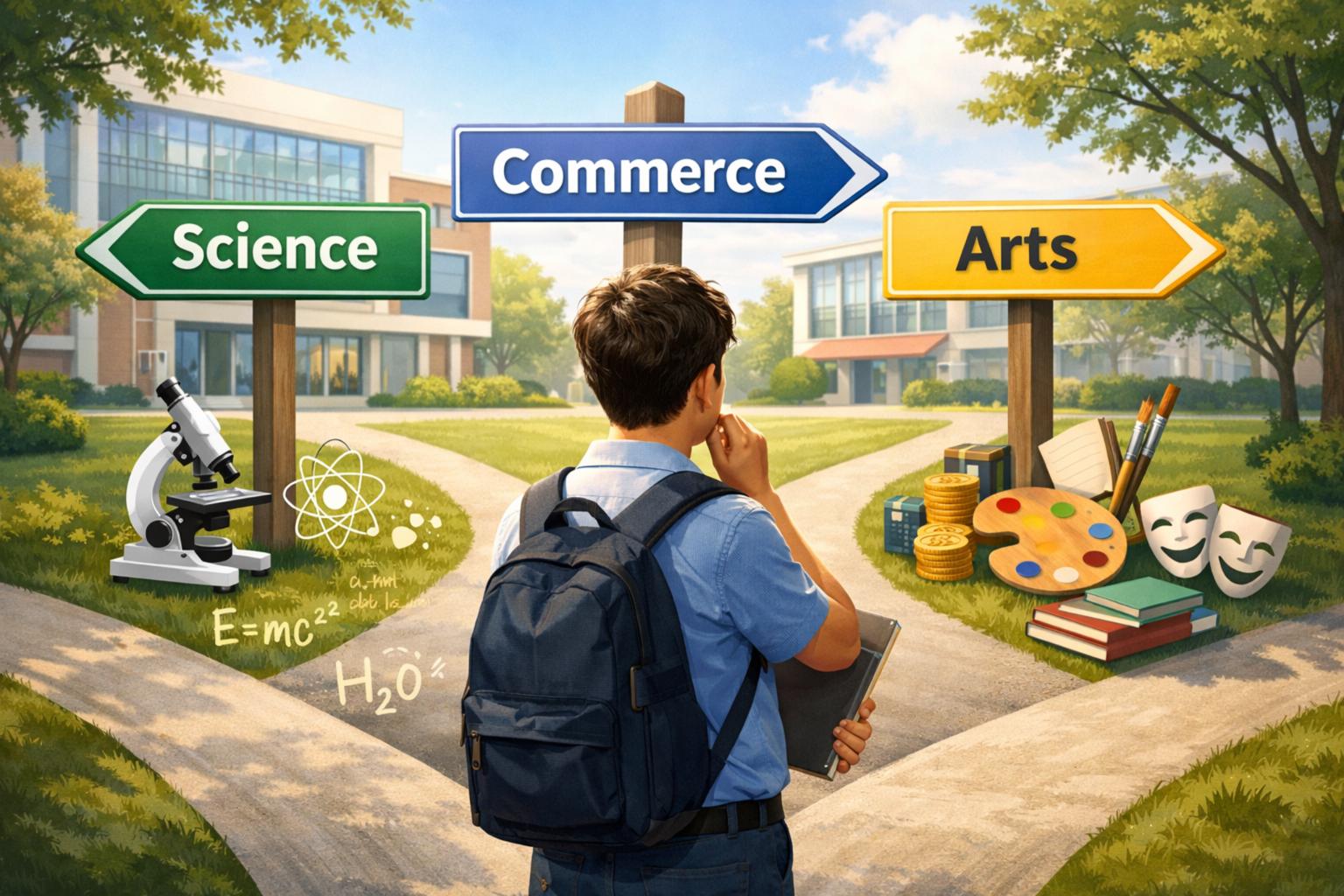
Every year, millions of students in India reach a turning point after completing Class 10. According to the Ministry of Education, more than 1.5 crore students appear for the Class 10 board examinations annually. Soon after results, they must select an academic stream—Science, Commerce, or Arts. While it may appear like a simple academic decision, it often influences higher education paths and career opportunities.
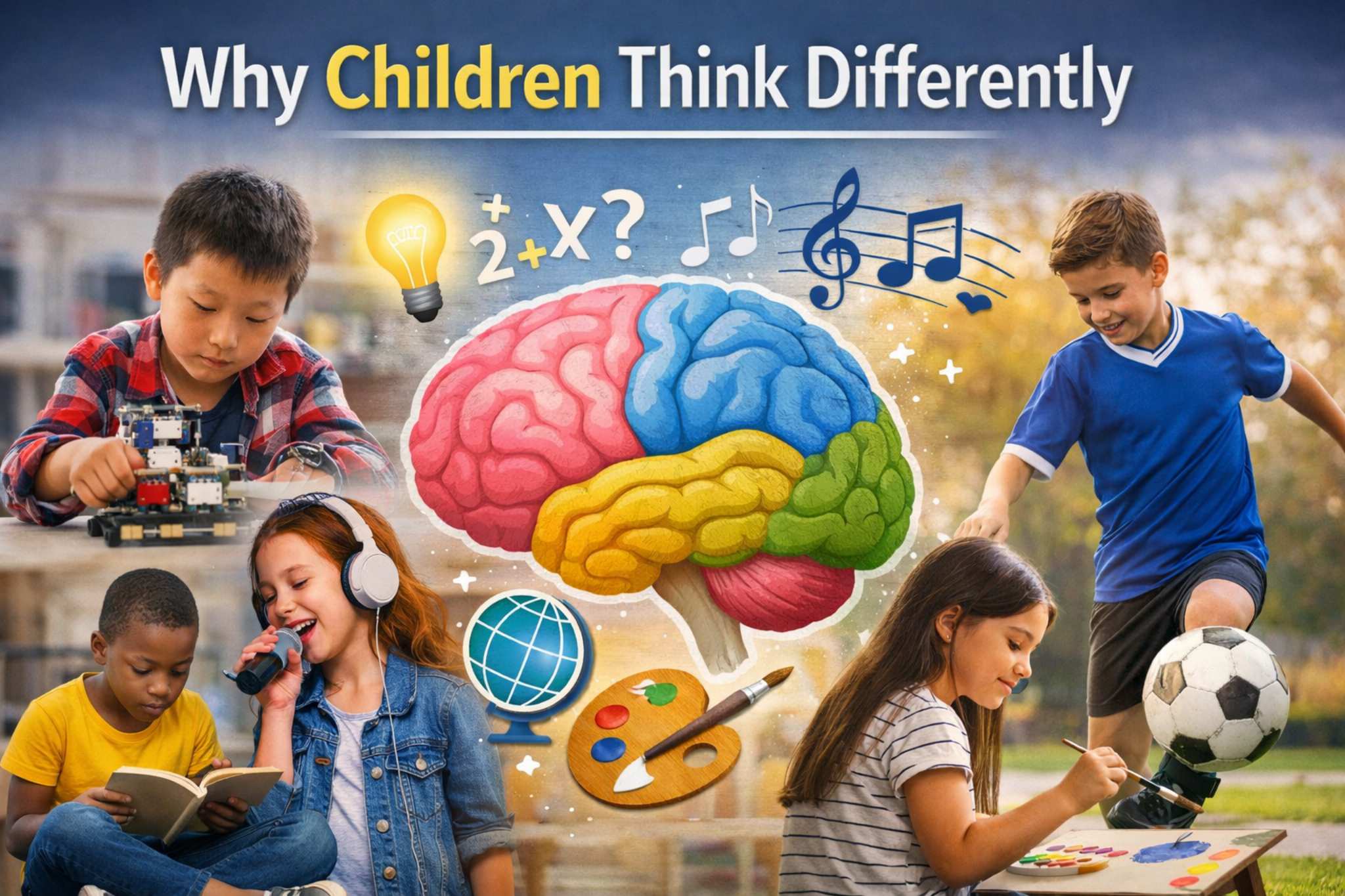
However, many students choose streams based on marks, peer influence, or parental expectations rather than their true abilities and interests. Research by the OECD indicates that students who align education choices with their strengths are significantly more likely to remain engaged and perform better academically. Understanding personal aptitude and interests helps students make informed decisions instead of following common assumptions about “popular” streams.
Choosing the right academic stream after Class 10 determines the subjects students study for the next two years and often influences their higher education choices. According to the National Education Policy (2020) discussions, early academic choices can impact long-term career trajectories.
When students select streams aligned with their aptitude and interests, they tend to show higher academic engagement and confidence. Studies from UNESCO education reports highlight that students performing in areas aligned with their strengths demonstrate improved learning outcomes and career satisfaction.
Many students select Science, Commerce, or Arts based on marks alone. While marks reflect academic performance, they do not always reveal natural strengths or interests. According to career development research from the National Career Development Association, aligning career choices with aptitude significantly improves long-term professional satisfaction.
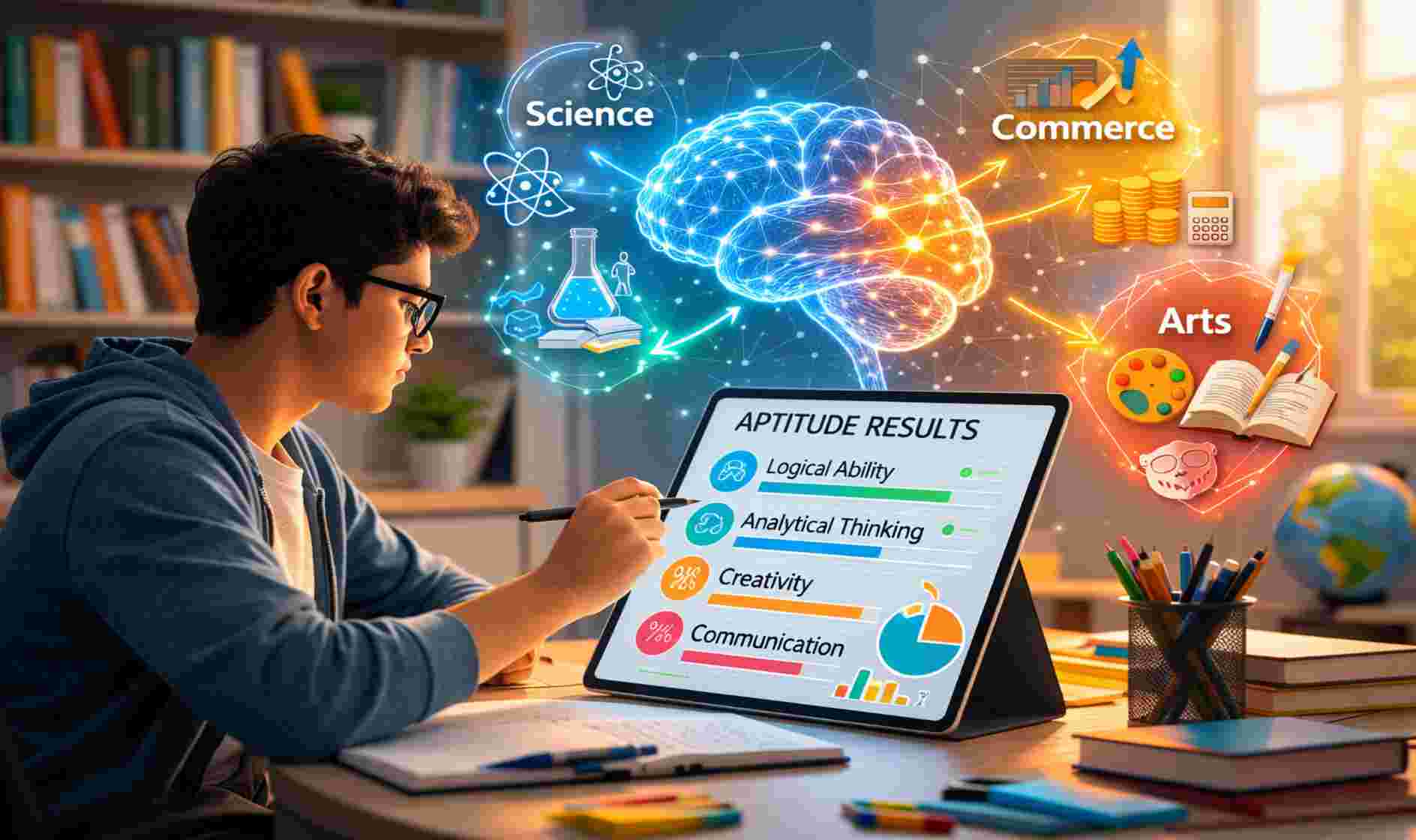
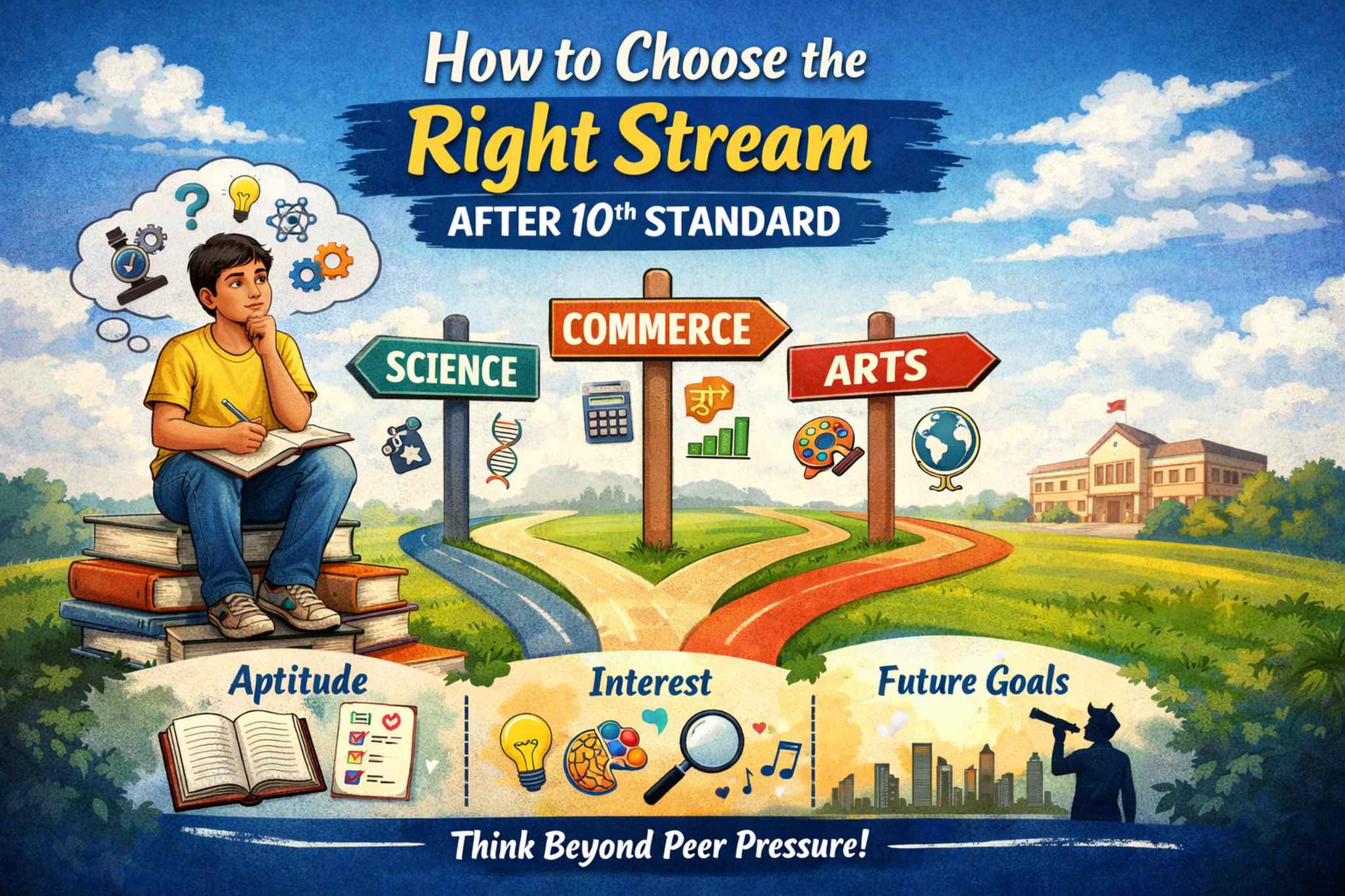
A better approach is to evaluate three key aspects: aptitude, interest, and personality. Aptitude shows natural abilities in areas like logical reasoning, numerical ability, or creativity. Interests indicate what subjects or activities students enjoy learning about. Personality traits influence working styles and career preferences. Tools such as psychometric assessments help students objectively understand these factors, enabling them to choose streams confidently instead of relying solely on assumptions.

Ranchview Dr. Richardson, California 62639
Newyork, 62639
California 62639